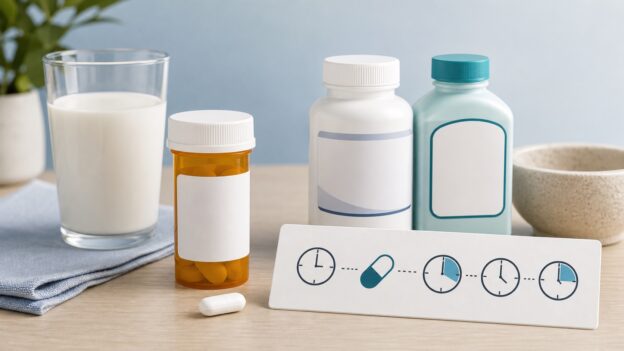
Cipro interactions with dairy minerals and supplements

Decoding Ciprofloxacin (Cipro) Interactions: Food, Dairy, Minerals, and Supplements

Decoding Ciprofloxacin (Cipro) Interactions: Food, Dairy, Minerals, and Supplements

When your doctor prescribes Ciprofloxacin (Cipro) for a stubborn bacterial infection, the focus is typically on eliminating the pathogen and restoring your health. However, how you take this powerful fluoroquinolone antibiotic is just as critical as taking it in the first place. Cipro is highly susceptible to chemical interactions in your gastrointestinal tract, specifically with certain foods, beverages, over-the-counter (OTC) supplements, and daily medications.

Ignoring these interactions doesn’t just cause minor stomach upset; it can fundamentally neutralize the antibiotic. If the drug is blocked from entering your bloodstream, the bacteria survive, mutate, and potentially develop resistance, leading to a much more dangerous and difficult-to-treat infection. This comprehensive guide explores the biochemistry behind Cipro’s interactions, specifically detailing how dairy products, mineral supplements, and antacids can render this medication ineffective, and provides actionable steps to ensure maximum drug efficacy.

The Science Behind Cipro Absorption and Chelation

To understand why Cipro interacts so poorly with certain substances, one must understand a chemical process called chelation. The Ciprofloxacin molecule contains specific chemical oxygen atoms that act like magnets for positively charged metal ions. These ions are known as polyvalent cations (specifically divalent and trivalent cations) and include Calcium (Ca2+), Magnesium (Mg2+), Aluminum (Al3+), Iron (Fe2+/Fe3+), and Zinc (Zn2+).

When Cipro encounters these metal ions in your stomach or small intestine, the molecules bind together tightly, forming an insoluble, heavy complex. Because this new chelated complex is too large and poorly soluble to pass through the intestinal wall into the bloodstream, it simply travels through your digestive system and is excreted in your feces. The result? The bioavailability of the antibiotic plummets. Clinical pharmacokinetic studies show that simultaneous ingestion of Cipro with heavy antacids or iron can reduce the antibiotic’s absorption by up to 90%. Essentially, you are swallowing the pill, but your body is receiving virtually none of the medicine.

Dairy Products and Calcium-Fortified Foods

Dairy products are the most common source of interaction simply because they are a staple in many daily diets. Milk, yogurt, cheese, and kefir are exceptionally rich in calcium.

The Dairy Rule: You should never take Ciprofloxacin concurrently with dairy products alone. If you wash your pill down with a glass of milk or eat a bowl of yogurt immediately after taking your dose, the calcium will immediately bind to the drug.

Calcium-Fortified Foods: The danger is not limited to cow’s milk. The modern grocery aisle is filled with fortified products. Orange juice with added calcium, calcium-enriched almond or soy milk, and even certain fortified cereals will trigger the exact same chelation process as a glass of whole milk.

The Exception (Mixed Meals): Interestingly, if dairy is a small part of a larger, nutritionally complex meal (for example, a slice of cheese on a large turkey sandwich, or milk baked into a casserole), the interaction is significantly blunted. The other macro-nutrients in the meal delay gastric emptying and prevent the calcium from overwhelming the Cipro molecules. The FDA explicitly notes that Cipro can be taken with meals that contain dairy, provided the dairy is not the sole component of the meal.

Antacids and Over-The-Counter Heartburn Medications

Many patients experience mild gastrointestinal distress or nausea when taking antibiotics, prompting them to reach for an over-the-counter antacid. Doing so with Cipro can be a catastrophic mistake for your treatment plan.

Common liquid and chewable antacids—such as Maalox, Mylanta, Tums, and Rolaids—are essentially large doses of Magnesium Hydroxide, Aluminum Hydroxide, and Calcium Carbonate. These are the exact polyvalent cations that bind to Ciprofloxacin.

What about PPIs and H2 Blockers?
Unlike heavy metal-based antacids, medications that reduce stomach acid by altering gastric cell function do not contain binding metals. Proton Pump Inhibitors (PPIs) like Omeprazole (Prilosec) or H2-receptor antagonists like Famotidine (Pepcid) generally do not cause chelation. While they alter the pH of the stomach, pharmacokinetic data indicates they do not significantly reduce the overall bioavailability of Cipro. If you must manage heartburn while on Cipro, a PPI or H2 blocker is vastly safer than a Tums or Mylanta.

Mineral Supplements and Multivitamins

The health and wellness boom has led to widespread use of daily vitamins, many of which pose a direct threat to Cipro absorption.

  • Iron Supplements: Whether taken for anemia as Ferrous Sulfate or in a prenatal vitamin, iron binds aggressively to fluoroquinolones. Absorption of Cipro can be slashed by over 60% when taken with iron.
  • Zinc and Magnesium: Often taken for immune support or sleep enhancement (like Magnesium Glycinate or Citrate), these minerals are potent chelators.
  • Multivitamins: A standard daily multivitamin typically contains a cocktail of calcium, iron, zinc, and magnesium. You must treat a standard multivitamin exactly as you would an antacid.
  • Sucralfate (Carafate): Used to coat and heal stomach ulcers, sucralfate is heavy in aluminum and severely inhibits Cipro absorption.
  • Phosphate Binders: Medications like Sevelamer, used in chronic kidney disease, also interfere significantly.

The Caffeine and Theophylline Interaction

While minerals stop Cipro from getting into your body, Cipro stops certain other chemicals from leaving your body. Ciprofloxacin is a known inhibitor of the CYP1A2 enzyme in the liver. This specific enzyme is responsible for metabolizing caffeine.

When you take Cipro, your liver’s ability to clear caffeine slows down dramatically. The half-life of caffeine can double or triple. If you drink your normal two cups of coffee while on Cipro, the caffeine will accumulate in your bloodstream, potentially leading to severe jitters, heart palpitations, insomnia, and intense anxiety. Patients are strongly advised to severely restrict or entirely eliminate coffee, energy drinks, and strong teas while completing their antibiotic course.

Practical Dosing Schedule and Guidelines

To navigate these complex interactions, timing is everything. The goal is to ensure the Cipro has fully passed through the stomach and upper intestine before any binding agents are introduced, or vice versa.

The Golden Rule of Timing:

  • Take Ciprofloxacin at least 2 hours BEFORE consuming antacids, mineral supplements, multivitamins, or heavy dairy.
  • Alternatively, take Ciprofloxacin at least 6 hours AFTER consuming these interacting substances.

Example Schedule:

If you take Cipro at 8:00 AM and 8:00 PM:

  • 8:00 AM: Take Cipro with a glass of water and plain toast.
  • 10:30 AM: You may safely take your daily multivitamin, iron pill, or have a yogurt.
  • 2:00 PM: You may safely take a Tums if you have heartburn.
  • 8:00 PM: Take your evening Cipro dose. (Ensure you have not had any supplements or antacids since 2:00 PM).

Frequently Asked Questions (FAQ)

Q: I accidentally took my Cipro with a glass of milk. What should I do?
A: Do not panic, and do not double your next dose. Continue with your prescribed schedule for the next dose, ensuring you use water next time. If you notice your infection symptoms worsening over the next few days, contact your doctor, as the missed absorption may have hindered your progress.

Q: Does almond milk or oat milk interact with Cipro?
A: Natural, unfortified oat or almond milk does not contain enough calcium to cause a problem. However, the vast majority of commercial plant-based milks are heavily fortified with Calcium Carbonate to match the nutritional profile of dairy milk. Check the nutrition label; if it shows high calcium content, you must treat it like dairy milk.

Q: Can I drink alcohol while taking Ciprofloxacin?
A: There is no direct chemical interaction between Cipro and alcohol that reduces the antibiotic’s effectiveness. However, both alcohol and Cipro can cause dizziness, upset stomach, and minor cognitive changes. Combining them can exacerbate these side effects, so it is generally recommended to avoid alcohol while recovering from a severe infection.

Q: Can I take Cipro on an empty stomach?
A: Yes, Cipro is actually absorbed faster and more completely on an empty stomach. Taking it with a full glass of water 1 hour before or 2 hours after meals is ideal, provided you do not experience severe nausea doing so. If nausea occurs, a non-dairy, low-calcium snack (like crackers or a banana) is acceptable.

References

  • Polk, R. E. (1989). Drug-drug interactions with ciprofloxacin and other fluoroquinolones. The American Journal of Medicine, 87(5A), 76S-81S.
  • Lomaestro, B. M., & Bailie, G. R. (1991). Quinolone-cation interactions: a review. DICP, The Annals of Pharmacotherapy, 25(11), 1249-1258.
  • Zix, H. R., Geerdes-Fenge, H. F., Rau, M., & Lode, H. (1997). Pharmacokinetics of sparfloxacin and interaction with cisapride and sucralfate. Antimicrobial Agents and Chemotherapy, 41(8), 1668-1672.
  • U.S. Food and Drug Administration (FDA). Ciprofloxacin (Cipro) Prescribing Information.
  • Pappas, K. B., & Rybak, M. J. (1992). Dietary and lifestyle interactions with fluoroquinolones. Journal of Pharmacy Technology, 8(6), 241-248.

Medical Disclaimer: This article is for educational purposes only and is not a substitute for professional medical advice, diagnosis, or treatment. Always consult a qualified healthcare provider before making any decisions about medications. If you experience severe symptoms, seek emergency medical care immediately.