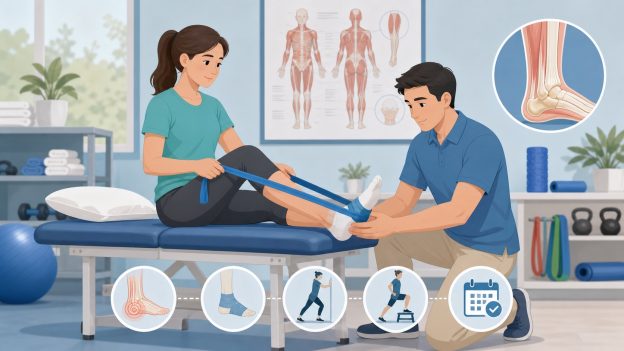
Cipro Side Effects and Exercise: Safer Activity Planning During Treatment
For active individuals, athletes, and those who rely on daily exercise for physical and mental well-being, being prescribed Ciprofloxacin (Cipro) presents a unique and frustrating challenge. While antibiotics are essential for clearing bacterial infections, fluoroquinolones like Cipro carry severe, FDA-mandated Black Box Warnings regarding their impact on the musculoskeletal system. The most notorious of these side effects is the dramatically increased risk of tendinopathy and complete tendon rupture.
Editorial safety update: Cipro Side Effects and Exercise: Safer Activity Planning During Treatment
Last reviewed: June 20, 2026. This page was updated to make the patient-safety purpose clearer, add practical monitoring steps, and point readers to authoritative ciprofloxacin safety information. It is written for people preparing for a conversation with a prescriber or pharmacist, not for self-diagnosis or medication changes.
How to use this article: focus on the timing of symptoms, whether the infection itself is improving, and which details would help a clinician decide whether ciprofloxacin is still the right choice. For cipro side effects and exercise: safer activity planning during treatment, the main practical theme is tendon, muscle, and joint safety.
Key points to take from this page
- Pause strenuous activity and contact a clinician promptly if new tendon pain, swelling, warmth, stiffness, or sudden weakness appears.
- Mention corticosteroid use, age over 60, kidney disease, transplant history, or a prior tendon problem because these can change the risk discussion.
- Track where the pain started, which dose day it appeared on, and whether walking, gripping, lifting, or stairs make it worse.
Questions worth asking a clinician or pharmacist
- Does this symptom fit a tendon warning that needs an exam or imaging?
- Should activity be restricted until a clinician reviews the symptom pattern?
- Is there a non-fluoroquinolone option for this infection if risk factors are present?
Related safety reading on this site
- Cipro and Steroids: Tendon Risk
- Emergency Warning Signs With Cipro Side Effects
- Questions to Ask Your Pharmacist About Cipro Side Effects
Authoritative sources used for this update
- FDA prescribing information for CIPRO tablets and oral suspension
- MedlinePlus ciprofloxacin drug information
- FDA MedWatch adverse event reporting program
Medical note: seek urgent care for severe allergic symptoms, trouble breathing, sudden severe chest/back/abdominal pain, fainting, seizures, severe confusion, serious blood-sugar symptoms, severe or bloody diarrhea, or sudden tendon pain with loss of function. For less dramatic but new symptoms, contact the prescribing clinician promptly.
Exercising while taking Cipro, or in the months immediately following treatment, requires a fundamental shift in how you approach physical activity. Standard workout routines, particularly those involving high-impact or heavy resistance, can transform from healthy habits into catalysts for severe injury. This guide delves into the physiological reasons why Cipro makes exercise dangerous, which activities must be avoided, and how to safely plan your activity during and after your treatment course.
The Biomechanics of Cipro Toxicity During Physical Activity
To understand why exercise is perilous while on Cipro, it is necessary to examine how the drug alters your connective tissues at a cellular level. Tendons are dense bands of fibrous connective tissue, composed primarily of type I collagen, that connect muscle to bone. They are designed to withstand incredible mechanical tension, acting as biological springs that absorb and release energy during movement.
Fluoroquinolones interfere with this intricate system in several devastating ways:
- Upregulation of Matrix Metalloproteinases (MMPs): Medical research, including pharmacological studies indexed in PubMed, demonstrates that Cipro increases the expression of MMPs. These enzymes actively degrade the extracellular matrix and break down collagen fibers, fundamentally weakening the structural integrity of the tendon.
- Inhibition of Tenocyte Proliferation: Tenocytes are the specialized cells responsible for maintaining and repairing tendon tissue. Cipro causes mitochondrial dysfunction and oxidative stress within these cells, halting their ability to divide and repair the micro-tears that naturally occur during exercise.
- Magnesium Chelation: Fluoroquinolones bind (chelate) to essential minerals, particularly magnesium, which is crucial for cellular energy and connective tissue health. This localized depletion further impairs the tendon’s structural stability.
When you exercise, you apply mechanical load to your tendons. Normally, this stimulates strengthening and adaptation. However, when the collagen matrix is actively degrading and the repair mechanisms are paralyzed by Cipro, applying mechanical stress can easily exceed the tendon’s diminished tensile limit, resulting in sudden tearing or a complete rupture.
High-Risk Exercises to Strictly Avoid
During a course of Cipro and for several months afterward, certain types of physical activity carry an unacceptably high risk of catastrophic tendon failure. The Achilles tendon bears the highest risk, but the patellar (knee), rotator cuff, and biceps tendons are also highly vulnerable. According to sports medicine guidelines and orthopedic specialists, the following activities should be strictly avoided:
1. Plyometrics and Explosive Movements
Activities that require sudden, powerful muscle contractions apply immense, instantaneous stress to tendons. This includes box jumps, burpees, sprinting, Olympic weightlifting, and sports that require sudden changes in direction, such as basketball, tennis, or soccer. The rapid loading required by these movements is the most common trigger for fluoroquinolone-induced Achilles tendon ruptures.
2. Heavy Resistance Training
Lifting heavy weights, particularly exercises that heavily load the major tendons (like heavy squats, deadlifts, bench presses, or calf raises), pushes the structural limits of connective tissue. When taking Cipro, your tendons cannot handle their normal maximum loads. Reducing the weight is not always sufficient; the repetitive strain of traditional bodybuilding routines can still induce tendinopathy.
3. High-Impact Cardiovascular Exercise
Running on pavement or treadmills forces your Achilles and patellar tendons to absorb shock equivalent to several times your body weight with every single step. This repetitive, high-impact stress on chemically weakened collagen fibers is a primary cause of exercise-induced damage during fluoroquinolone therapy.
Designing a Safer Activity Plan: What Can You Do?
Total immobility is rarely recommended unless you are already experiencing severe tendon pain, but aggressive exercise must be paused. The goal during and after Cipro treatment is to maintain baseline circulation and joint mobility without subjecting the tendons to high tensile loads or shock.
Low-Impact and Controlled Modalities
If you feel well enough to remain active, focus on modalities that eliminate sudden shocks and allow you to control the exact amount of tension applied to your body:
- Swimming and Water Aerobics: Water buoyancy eliminates impact and drastically reduces the gravitational load on your lower extremities, making it one of the safest options for maintaining cardiovascular health.
- Gentle Cycling: Riding a stationary bike with low resistance can keep your legs moving and promote blood flow without the repetitive impact of running. Ensure the seat height is correctly adjusted to avoid over-stretching the Achilles or patellar tendons.
- Slow Walking: Walking on flat, even surfaces (preferably softer surfaces like a rubberized track) at a relaxed pace is generally acceptable. Avoid steep inclines or declines, which increase the stretch and load on the Achilles tendon.
- Restorative Yoga and Tai Chi: Focus on slow, controlled movements. However, avoid deep, prolonged stretches that push a joint to its extreme end-range of motion, as weakened tendons can overstretch.
The Importance of Proprioception and Biofeedback
While exercising lightly, you must become hyper-aware of your body’s signals. Fluoroquinolone-induced tendon damage often occurs without the traditional warning signs of muscle fatigue. A healthy workout burn is felt in the muscle belly; a sharp, localized, or burning sensation near a joint or along a tendon is an immediate red flag. If you feel any unusual sensation in your heels, knees, shoulders, or wrists, stop the activity instantly.
The Extended Timeline for Returning to Sports
A critical piece of information that patients often overlook is the extended timeline of fluoroquinolone toxicity. The danger does not disappear when you swallow the last pill. Guidelines from organizations such as the European Medicines Agency (EMA) and various orthopedic institutions warn that the risk of tendon rupture remains significantly elevated for up to six months post-treatment.
Returning to your previous level of physical activity must be treated with the same caution as rehabilitating a major injury. The Journal of Orthopaedic & Sports Physical Therapy suggests that rehabilitation protocols for fluoroquinolone-affected tendons must be fundamentally different from standard tendinopathy rehab. Standard protocols often rely on heavy eccentric loading to stimulate collagen repair; however, in a Cipro-compromised tendon, this can cause further damage.
Phased Return Protocol
- Phase 1 (0-4 Weeks Post-Treatment): Stick strictly to low-impact activities. Prioritize rest and nutritional support (adequate protein, Vitamin C, and hydration).
- Phase 2 (1-3 Months Post-Treatment): Gradually reintroduce moderate-intensity, non-impact activities. Begin light resistance training using resistance bands rather than heavy free weights, focusing on high repetitions and extremely low resistance.
- Phase 3 (3-6 Months Post-Treatment): Slowly reintroduce impact activities, starting with short intervals. For example, jog for 1 minute, walk for 4 minutes. Monitor for pain for 48 hours after each session before progressing.
- Phase 4 (6+ Months): Gradual return to explosive sports and heavy lifting, provided no symptoms have occurred.
When to Stop Completely and Seek Medical Attention
If you experience any of the following symptoms during or after exercise while on Cipro, cease all physical activity immediately and contact a healthcare professional:
- A sudden, sharp pain in a tendon area.
- Visible swelling or a feeling of warmth localized over a tendon.
- A sensation of snapping, popping, or tearing.
- Significant stiffness or an inability to bear weight on a limb.
Continuing to push through the pain is the most dangerous decision you can make, as a partial tear can quickly progress to a complete rupture requiring surgical repair.
Frequently Asked Questions (FAQ)
Is stretching safe while taking Cipro?
Gentle, dynamic mobility movements are generally safe and encourage blood flow. However, aggressive, deep static stretching (where you hold a stretch at the point of discomfort for a long period) should be avoided. Overstretching a biochemically weakened tendon can cause micro-tears.
I am a competitive athlete. What should I do if prescribed Cipro?
If you are an athlete, you must have an urgent discussion with your prescribing physician. Inform them of your training demands and strongly request a safer, non-fluoroquinolone alternative antibiotic (such as a cephalosporin or macrolide) if it is effective against your specific infection. The risk to an athlete’s career from a Cipro-induced rupture is immense.
Can physical therapy help me exercise safely while on Cipro?
Yes, but you must ensure your physical therapist is knowledgeable about fluoroquinolone toxicity. A standard physical therapist might unknowingly prescribe exercises that are too aggressive. An informed PT can design a highly conservative, blood-flow-promoting routine that avoids tendon loading.
If I feel fine during the medication course, am I safe to return to normal workouts?
No. One of the most insidious aspects of fluoroquinolone side effects is their delayed onset. Many patients experience spontaneous tendon ruptures weeks or even months after finishing their prescription, often during routine activities. You must adhere to a prolonged, cautious return-to-play protocol regardless of how you feel initially.
Medical Disclaimer: This article is for educational purposes only and is not a substitute for professional medical advice, diagnosis, or treatment. Always consult a qualified healthcare provider before making any decisions about medications. If you experience severe symptoms, seek emergency medical care immediately.