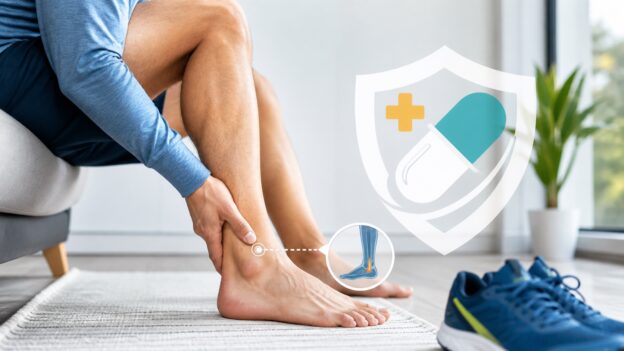
The Achilles Tendon: The Most Common Casualty of Cipro
If you have been prescribed ciprofloxacin (Cipro) for a bacterial infection and suddenly develop a sharp, burning, or aching pain in the back of your heel, you are experiencing a known and serious side effect. The Achilles tendon is the thickest and strongest tendon in the human body, connecting your calf muscles (the gastrocnemius and soleus) to your heel bone (the calcaneus). It acts like a powerful spring, absorbing forces up to eight times your body weight when you run or jump.
Editorial safety update: Immediate Steps to Take for Cipro-Induced Achilles Tendon Pain
Last reviewed: June 20, 2026. This page was updated to make the patient-safety purpose clearer, add practical monitoring steps, and point readers to authoritative ciprofloxacin safety information. It is written for people preparing for a conversation with a prescriber or pharmacist, not for self-diagnosis or medication changes.
How to use this article: focus on the timing of symptoms, whether the infection itself is improving, and which details would help a clinician decide whether ciprofloxacin is still the right choice. For immediate steps to take for cipro-induced achilles tendon pain, the main practical theme is tendon, muscle, and joint safety.
Key points to take from this page
- Pause strenuous activity and contact a clinician promptly if new tendon pain, swelling, warmth, stiffness, or sudden weakness appears.
- Mention corticosteroid use, age over 60, kidney disease, transplant history, or a prior tendon problem because these can change the risk discussion.
- Track where the pain started, which dose day it appeared on, and whether walking, gripping, lifting, or stairs make it worse.
Questions worth asking a clinician or pharmacist
- Does this symptom fit a tendon warning that needs an exam or imaging?
- Should activity be restricted until a clinician reviews the symptom pattern?
- Is there a non-fluoroquinolone option for this infection if risk factors are present?
Related safety reading on this site
- Cipro and Steroids: Tendon Risk
- Emergency Warning Signs With Cipro Side Effects
- Questions to Ask Your Pharmacist About Cipro Side Effects
Authoritative sources used for this update
- FDA prescribing information for CIPRO tablets and oral suspension
- MedlinePlus ciprofloxacin drug information
- FDA MedWatch adverse event reporting program
Medical note: seek urgent care for severe allergic symptoms, trouble breathing, sudden severe chest/back/abdominal pain, fainting, seizures, severe confusion, serious blood-sugar symptoms, severe or bloody diarrhea, or sudden tendon pain with loss of function. For less dramatic but new symptoms, contact the prescribing clinician promptly.
Despite its strength, the Achilles tendon is exceptionally vulnerable to the toxic effects of fluoroquinolone antibiotics like Cipro. Up to 90% of all fluoroquinolone-associated tendon issues involve the Achilles. This is because a specific region of the tendon, located about 2 to 6 centimeters above the heel bone, has a naturally poor blood supply. This area, known as the “watershed zone,” struggles to clear out toxins and has a harder time repairing microscopic cellular damage caused by the medication. When Cipro degrades the collagen matrix in this low-blood-flow area, the heavy mechanical load placed on the Achilles during simple tasks like walking can cause the tendon to rapidly tear or completely rupture.
Recognizing the Early Warning Signs
A Cipro-induced Achilles tendon injury rarely starts as a massive snap out of nowhere without some preceding warning signs. It is critical to recognize these early symptoms of tendinopathy before they progress to a full rupture. Look out for the following:
- Morning Stiffness: Severe stiffness in the back of the ankle upon taking your first few steps out of bed in the morning.
- Point Tenderness: A specific spot on the tendon that is highly painful to the touch, usually in the watershed zone mentioned above.
- Visible Swelling: The injured Achilles may look noticeably thicker, swollen, or inflamed compared to your healthy leg.
- Pain During Flexion: Pain that worsens when you pull your toes toward your shin, which stretches the calf and Achilles.
- A “Mushy” Texture: A healthy tendon feels tight and taut like a thick cable. A Cipro-damaged tendon may feel unusually soft or spongy when gently pinched.
The Immediate Action Plan (The First 48 Hours)
If you suspect that Cipro is damaging your Achilles tendon, you must treat the situation as a medical emergency to prevent a complete rupture. A complete tear will require major surgery or months of immobilization in a cast. Follow this first-response protocol immediately:
Step 1: Stop the Medication and Call Your Doctor
Do not take another dose of Cipro until you have spoken with your prescribing physician. Explain that you are experiencing acute Achilles tendon pain, which is a Black Box Warning for the drug. Request an immediate switch to a different class of antibiotic (such as a penicillin, cephalosporin, or macrolide) to treat your underlying infection safely.
Step 2: Absolute Non-Weight Bearing
You must offload the damaged tendon immediately. Do not attempt to “walk it off” or stretch the tendon, as stretching a chemically weakened collagen matrix can trigger a snap. Use crutches, a walker, or a wheelchair to keep all weight off the affected foot. If you must stand, do not let your heel drop flat to the ground.
Step 3: Elevate Your Heel
If walking short distances is unavoidable, you must use a shoe with a significant heel lift (at least 1-2 centimeters) or an orthopedic walking boot (CAM walker) with heel wedges. Elevating the heel shortens the Achilles tendon, bringing the torn fibers closer together and drastically reducing the tension and stress placed on the tendon.
Step 4: Gentle Ice and Compression
To manage acute inflammation and pain, apply an ice pack wrapped in a thin towel to the back of the heel for 15-20 minutes, 3-4 times a day. You can also wrap the ankle gently with a light elastic compression bandage to reduce swelling, but ensure it is not wrapped too tightly to avoid restricting blood flow.
Step 5: Avoid Corticosteroids and NSAIDs
Do not let a doctor inject the area with corticosteroids (cortisone shots), and avoid oral steroids like prednisone. Steroids further break down collagen and dramatically multiply the risk of a rupture when combined with Cipro. Additionally, try to avoid NSAIDs like ibuprofen or naproxen. While they mask the pain, some orthopedic studies suggest they can interfere with the chemical processes required for early tendon healing. If pain control is necessary, acetaminophen (Tylenol) is generally a safer choice.
Rehabilitation and the Recovery Timeline
Healing from a fluoroquinolone-induced Achilles injury is vastly different from healing a standard sports injury. Because the damage is chemical and structural at the cellular level, the recovery timeline is significantly extended.
The Acute Phase (Weeks 1-4)
During the first month, the primary goal is strict protection. This means wearing a walking boot, using heel lifts, and continuing to limit weight-bearing. The body is attempting to clear the oxidative stress and halt the matrix metalloproteinases (MMPs) that are breaking down the tendon. Any aggressive physical therapy during this phase can be detrimental.
The Sub-Acute Phase (Months 1-3)
Once the acute, sharp pain has subsided and your doctor has cleared you, you can begin very gentle, passive range-of-motion exercises. The goal here is to encourage blood flow without applying a heavy load. Physical therapy modalities like low-level laser therapy (LLLT) or ultrasound may be introduced to stimulate cellular repair.
The Remodeling Phase (Months 3-6+)
This is when true strengthening begins. The cornerstone of Achilles tendinopathy rehabilitation is eccentric loading exercises. This involves slowly lengthening the muscle under tension (for example, standing on your toes on the edge of a stair and slowly lowering your heel down). However, for “Floxed” tendons, these exercises must be introduced far more cautiously and gradually than in a typical sports injury protocol. It is highly recommended to work with a physical therapist who understands the specific fragility of fluoroquinolone-damaged connective tissues.
Long-Term Outlook
Patients must understand that an Achilles tendon damaged by Cipro can take anywhere from six months to over a year to regain normal strength. During this prolonged recovery, you must remain vigilant and avoid sudden explosive movements like sprinting, playing tennis, or heavy weightlifting. Rushing the recovery process is the most common reason for setbacks or delayed ruptures.
Frequently Asked Questions (FAQ)
Can I massage the painful Achilles tendon?
In the acute early stages, deep tissue massage or harsh scraping (like Graston technique) on a Cipro-damaged tendon is highly discouraged. The tendon is structurally compromised, and aggressive physical manipulation can cause micro-tears to worsen. Gentle effleurage (light stroking) around the calf muscle (not directly on the tendon) to promote blood flow is safer.
Will an MRI show the Cipro damage?
An MRI or a musculoskeletal ultrasound can be very useful. While it won’t show “Cipro” per se, it will clearly show the structural results of the toxicity: tendon thickening, localized inflammation (tendinosis), fluid accumulation, or partial tearing. This imaging is crucial for a doctor to determine the severity of the injury.
Do nutritional supplements help the Achilles heal faster?
Many patients and integrative medicine practitioners advocate for specific nutritional support to counteract the drug’s mechanism. This often includes high-quality Magnesium (to replace what the drug chelated), Vitamin C (essential for collagen synthesis), and Collagen Peptides. While clinical trials are limited, these are generally safe additions to a physical recovery plan. Always consult your doctor before starting new supplements.
Is it safe to walk barefoot?
Absolutely not. Walking barefoot forces the Achilles tendon into its most stretched and loaded position. Until the tendon has fully healed, you should always wear supportive shoes with a slightly elevated heel, even when just walking around your house.
Authoritative Sources and References
- FDA Drug Safety Communications: Boxed Warning for fluoroquinolone-associated tendinopathy and tendon rupture.
- The American Orthopaedic Foot & Ankle Society (AOFAS): Guidelines on Achilles tendinopathy diagnosis and management.
- Journal of Antimicrobial Chemotherapy: Research on the pathophysiology of fluoroquinolone-induced tendon damage.
- British Journal of Sports Medicine (BJSM): Protocols for eccentric loading and rehabilitation of the Achilles tendon.
- Mayo Clinic: Overview of Achilles Tendon Rupture symptoms and first aid.
Medical Disclaimer: This article is for educational purposes only and is not a substitute for professional medical advice, diagnosis, or treatment. Always consult a qualified healthcare provider before making any decisions about medications. If you experience severe symptoms, seek emergency medical care immediately.