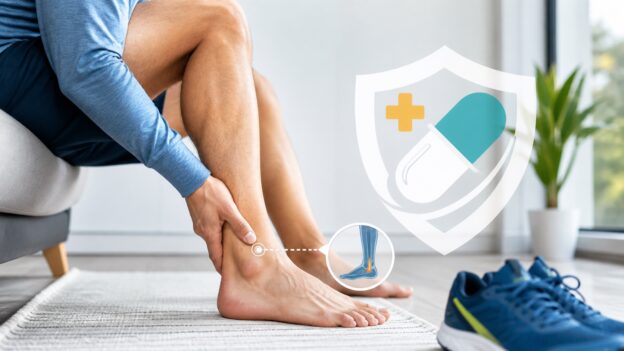
Beyond the Achilles: Upper Extremity Tendon Pain from Ciprofloxacin
When discussions arise regarding the severe musculoskeletal side effects of Ciprofloxacin (commonly known as Cipro), the conversation almost invariably centers on the Achilles tendon. While it is entirely true that the Achilles is the most frequently injured site—accounting for the vast majority of reported fluoroquinolone-induced tendon ruptures—this intense focus often overshadows a critical reality: Cipro can cause profound damage to the tendons in your shoulders, hands, wrists, and arms. If you are taking this powerful antibiotic and suddenly develop an aching shoulder, a painfully stiff thumb, or a sharp twinge in your bicep, it is imperative that you do not dismiss it as mere fatigue or a minor sprain.
Editorial safety update: Can Cipro Cause Shoulder, Hand, or Arm Tendon Pain?
Last reviewed: June 20, 2026. This page was updated to make the patient-safety purpose clearer, add practical monitoring steps, and point readers to authoritative ciprofloxacin safety information. It is written for people preparing for a conversation with a prescriber or pharmacist, not for self-diagnosis or medication changes.
How to use this article: focus on the timing of symptoms, whether the infection itself is improving, and which details would help a clinician decide whether ciprofloxacin is still the right choice. For can cipro cause shoulder, hand, or arm tendon pain?, the main practical theme is tendon, muscle, and joint safety.
Key points to take from this page
- Pause strenuous activity and contact a clinician promptly if new tendon pain, swelling, warmth, stiffness, or sudden weakness appears.
- Mention corticosteroid use, age over 60, kidney disease, transplant history, or a prior tendon problem because these can change the risk discussion.
- Track where the pain started, which dose day it appeared on, and whether walking, gripping, lifting, or stairs make it worse.
Questions worth asking a clinician or pharmacist
- Does this symptom fit a tendon warning that needs an exam or imaging?
- Should activity be restricted until a clinician reviews the symptom pattern?
- Is there a non-fluoroquinolone option for this infection if risk factors are present?
Related safety reading on this site
- Cipro and Steroids: Tendon Risk
- Emergency Warning Signs With Cipro Side Effects
- Questions to Ask Your Pharmacist About Cipro Side Effects
Authoritative sources used for this update
- FDA prescribing information for CIPRO tablets and oral suspension
- MedlinePlus ciprofloxacin drug information
- FDA MedWatch adverse event reporting program
Medical note: seek urgent care for severe allergic symptoms, trouble breathing, sudden severe chest/back/abdominal pain, fainting, seizures, severe confusion, serious blood-sugar symptoms, severe or bloody diarrhea, or sudden tendon pain with loss of function. For less dramatic but new symptoms, contact the prescribing clinician promptly.
The U.S. Food and Drug Administration (FDA) explicitly includes the rotator cuff (in the shoulder), the hand, the biceps, and the thumb in its official black box warning regarding fluoroquinolone-associated tendinopathy. The biological mechanism by which Cipro weakens connective tissue is systemic, meaning the drug circulates through your entire bloodstream and can potentially compromise any tendon in the human body. Understanding how this medication affects the upper extremities is vital for early detection, preventing catastrophic tears, and ensuring a safe recovery.
The pathophysiology behind this damage is complex but well-documented in pharmacological literature. Ciprofloxacin is believed to possess chelating properties, meaning it can bind to essential metal ions like magnesium, which are crucial for cellular function and the structural integrity of connective tissue. Furthermore, the drug has been shown to be toxic to tenocytes—the specialized cells responsible for producing collagen and repairing micro-damage in tendons. It also prematurely activates enzymes called matrix metalloproteinases (MMPs), which actively break down the existing collagen matrix. This biochemical assault turns normally robust, elastic tendons into fragile structures prone to tearing under entirely normal daily loads.
Specific Areas of Concern in the Upper Body
Because the upper extremities are involved in almost every aspect of daily living—from lifting groceries and typing on a keyboard to reaching for an item on a high shelf—tendinopathy in these areas can be profoundly disabling. Here is a closer look at how Cipro-induced damage manifests in specific regions of the arms and shoulders.
1. The Shoulder (Rotator Cuff Tendinopathy)
The shoulder joint is inherently unstable, relying heavily on a complex network of four muscles and their associated tendons—collectively known as the rotator cuff—to maintain its position and facilitate movement. When Cipro compromises these tendons (most commonly the supraspinatus tendon), patients often experience:
- Deep, Aching Pain: Often felt deep within the shoulder joint, radiating down the outside of the upper arm.
- Night Pain: Discomfort that significantly worsens at night, particularly if you attempt to sleep on the affected side.
- Weakness and Restricted Range of Motion: Difficulty performing overhead activities, such as brushing your hair, reaching into a cupboard, or putting on a jacket. A sudden inability to lift the arm against gravity could indicate a full-thickness tear.
2. The Hands and Wrists (De Quervain’s Tenosynovitis and Trigger Finger)
The hands are intricate biomechanical structures heavily reliant on fine, delicate tendons. The toxicity of fluoroquinolones can lead to rapid inflammation of the tendon sheaths in the wrist and digits.
- Thumb and Wrist Pain: Inflammation of the tendons at the base of the thumb (a condition known as De Quervain’s tenosynovitis) can cause severe pain when grasping objects, turning a doorknob, or forming a fist.
- “Catching” or Locking (Trigger Finger): The flexor tendons in the fingers can swell, making it difficult for them to glide smoothly through their protective sheaths. This results in the finger catching, snapping, or locking in a bent position.
- Loss of Grip Strength: Tasks requiring fine motor skills or strong gripping, such as opening a jar or typing, may become incredibly painful or impossible.
3. The Arms (Biceps Tendon Injuries)
The biceps muscle in the front of the upper arm attaches to the shoulder joint via the long head of the biceps tendon and to the elbow via the distal biceps tendon. Both attachments are vulnerable.
- Anterior Shoulder Pain: Pain located specifically at the front of the shoulder, often worsening with lifting or carrying.
- The “Popeye” Deformity: If the long head of the biceps tendon ruptures entirely, the muscle belly may retract down the arm, creating a visible, unnatural bulge near the elbow, accompanied by immediate, sharp pain and bruising.
- Elbow Pain: Pain at the crease of the elbow (distal attachment), particularly when attempting to bend the arm against resistance or turning the palm upward (supination).
Distinguishing Cipro Tendonitis from Ordinary Strain
How do you know if the ache in your shoulder is a direct result of your antibiotic or just a coincidence? While a definitive diagnosis requires a medical professional, there are distinct clinical hallmarks that differentiate fluoroquinolone-induced tendinopathy from standard wear-and-tear or sports injuries:
- Sudden Onset Without Trauma: Standard tendon injuries usually result from an acute trauma (like a fall) or chronic, repetitive overuse over months or years. Cipro-induced pain often appears rapidly—sometimes within 48 hours of the first dose—without any precipitating event, trauma, or change in physical activity.
- Bilateral Symptoms: It is remarkably common for fluoroquinolone toxicity to affect tendons symmetrically. If both of your shoulders or both of your wrists begin aching simultaneously while taking Cipro, this is a glaring red flag for a systemic drug reaction rather than a localized mechanical injury.
- Intense Tenderness and Swelling: The affected area may become visibly swollen, warm to the touch, and exquisitely tender if pressed lightly.
- Delayed Onset: Critically, the onset of pain does not always occur while you are actively taking the medication. Symptoms—and even complete ruptures—can manifest weeks or even up to several months after you have finished your prescription.
Immediate Actions: What to Do if Symptoms Occur
If you suspect you are experiencing tendon pain in your shoulder, arm, or hand related to Ciprofloxacin, you must act swiftly to prevent irreversible damage. The tensile strength of your connective tissue is actively declining, making a rupture a very real possibility.
1. Stop All Stressful Activity immediately.
Do not attempt to “push through” the pain, stretch it out, or continue with your exercise routine or heavy lifting. Immobilize the joint as much as practical to eliminate mechanical loading.
2. Contact Your Prescribing Physician.
Call your doctor immediately. Explain your symptoms and specifically mention your concern regarding the FDA black box warning for tendon rupture associated with Ciprofloxacin. Do not stop taking the antibiotic entirely on your own, as your underlying infection must still be treated. Your doctor should seamlessly transition you to a different class of antibiotics (such as a cephalosporin, macrolide, or penicillin) that does not carry a tendon toxicity risk.
3. Avoid Corticosteroids and NSAIDs.
Unless explicitly directed by a specialist who is fully aware of your Cipro usage, avoid oral corticosteroid medications (like prednisone) and steroid injections into the affected joint. Systemic steroids drastically multiply the risk of tendon rupture when combined with fluoroquinolones. Additionally, while Non-Steroidal Anti-Inflammatory Drugs (NSAIDs) like ibuprofen might dull the pain, they do not halt the underlying structural degradation and may mask symptoms, giving you a false sense of security.
4. Seek Imaging if a Rupture is Suspected.
If you experienced a sudden “pop,” immediate loss of strength, or significant bruising, you may have already suffered a partial or complete tear. Orthopedic specialists typically utilize Musculoskeletal Ultrasound or Magnetic Resonance Imaging (MRI) to assess the exact extent of the tendon damage.
Recovery and Rehabilitation Strategies
Recovering from fluoroquinolone-induced tendon damage is notoriously slow. Because the drug fundamentally alters the cellular biology of the tendon, healing takes much longer than a standard sports injury. Patience and strict adherence to medical guidance are essential.
Initial treatment focuses on the “RICE” protocol: Rest, Ice (to manage acute inflammation), Compression (if swelling is present), and Elevation. Your doctor may recommend a splint, sling, or brace to mechanically unload the compromised tendon—for instance, a thumb spica splint for De Quervain’s or an arm sling for severe rotator cuff pain.
Once the acute inflammatory phase subsides, physical therapy becomes the cornerstone of recovery. However, the rehabilitation protocol must be incredibly gentle and progressive. Aggressive stretching or heavy loading too early can precipitate the very rupture you are trying to avoid. A skilled physical therapist will guide you through slow, controlled isometric exercises to re-educate the muscles, eventually progressing to very light eccentric loading (the lengthening phase of a muscle contraction) which has been shown to stimulate healthy tendon remodeling over time.
Frequently Asked Questions
If my shoulder hurts while on Cipro, will I definitely need surgery?
No. While complete ruptures of the rotator cuff or biceps tendon may require surgical repair, early detection and immediate cessation of the drug can often prevent a full tear. Most cases of mild to moderate fluoroquinolone tendinopathy can be managed conservatively with prolonged rest and specialized physical therapy.
Are older people the only ones who get shoulder pain from Cipro?
While the risk of tendon rupture is significantly higher in individuals over the age of 60, cases of severe tendonitis and tearing in the upper extremities have been documented in healthy, young adults and athletes. The risk is universal, though it is amplified by age and concurrent corticosteroid use.
Can I massage the painful tendon to make it feel better?
Deep tissue massage or aggressive physical manipulation directly over a Cipro-weakened tendon is highly discouraged during the acute phase. The structural integrity of the tissue is compromised, and aggressive pressure could potentially worsen micro-tears or provoke further inflammation.
Why didn’t my doctor warn me about hand or shoulder pain?
Unfortunately, because the vast majority of clinical literature highlights the Achilles tendon, many healthcare providers may not proactively warn patients about the risks to the upper extremities. It is crucial to be your own advocate and recognize that the black box warning applies to tendons system-wide.
Authoritative Sources and Further Reading
For more detailed clinical information and support regarding medication safety and musculoskeletal health, consider reviewing the following resources:
- U.S. Food and Drug Administration (FDA): Detailed information on the safety labeling changes for fluoroquinolone antibacterial drugs.
- MedlinePlus (National Library of Medicine): Patient information concerning Ciprofloxacin and its potential side effects.
- American Society for Surgery of the Hand (ASSH): Clinical overviews of conditions like De Quervain’s tenosynovitis and trigger finger.
- UpToDate: Comprehensive clinical reviews on fluoroquinolone-associated tendinopathy for medical professionals.
- Mayo Clinic: Extensive patient health libraries covering rotator cuff injuries and tendonitis symptoms and treatments.
Medical Disclaimer: This article is for educational purposes only and is not a substitute for professional medical advice, diagnosis, or treatment. Always consult a qualified healthcare provider before making any decisions about medications. If you experience severe symptoms, seek emergency medical care immediately.