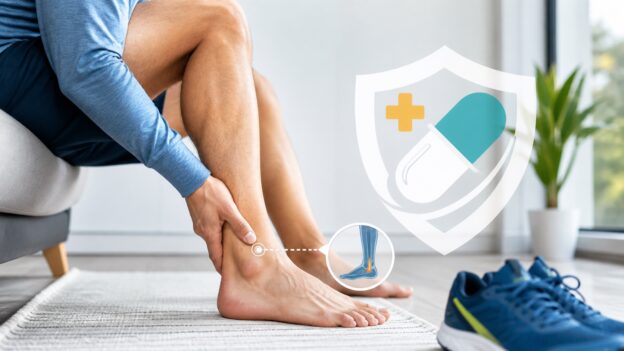
The Hidden Risks of Exercising on Ciprofloxacin
Maintaining an active lifestyle is generally one of the best things you can do for your overall health. However, if you have recently been prescribed Ciprofloxacin (Cipro) to treat a bacterial infection, you need to hit the pause button on your usual workout routine. This potent fluoroquinolone antibiotic carries a significant and scientifically documented risk of causing tendinopathy—inflammation, swelling, and in severe cases, the complete rupture of tendons. Because exercise places mechanical stress and load on your body’s tendinous structures, combining intense physical activity with a Cipro prescription can dramatically increase your likelihood of experiencing a debilitating musculoskeletal injury.
Editorial safety update: Exercise While Taking Cipro: Safer Activity Tips
Last reviewed: June 20, 2026. This page was updated to make the patient-safety purpose clearer, add practical monitoring steps, and point readers to authoritative ciprofloxacin safety information. It is written for people preparing for a conversation with a prescriber or pharmacist, not for self-diagnosis or medication changes.
How to use this article: focus on the timing of symptoms, whether the infection itself is improving, and which details would help a clinician decide whether ciprofloxacin is still the right choice. For exercise while taking cipro: safer activity tips, the main practical theme is tendon, muscle, and joint safety.
Key points to take from this page
- Pause strenuous activity and contact a clinician promptly if new tendon pain, swelling, warmth, stiffness, or sudden weakness appears.
- Mention corticosteroid use, age over 60, kidney disease, transplant history, or a prior tendon problem because these can change the risk discussion.
- Track where the pain started, which dose day it appeared on, and whether walking, gripping, lifting, or stairs make it worse.
Questions worth asking a clinician or pharmacist
- Does this symptom fit a tendon warning that needs an exam or imaging?
- Should activity be restricted until a clinician reviews the symptom pattern?
- Is there a non-fluoroquinolone option for this infection if risk factors are present?
Related safety reading on this site
- Cipro and Steroids: Tendon Risk
- Emergency Warning Signs With Cipro Side Effects
- Questions to Ask Your Pharmacist About Cipro Side Effects
Authoritative sources used for this update
- FDA prescribing information for CIPRO tablets and oral suspension
- MedlinePlus ciprofloxacin drug information
- FDA MedWatch adverse event reporting program
Medical note: seek urgent care for severe allergic symptoms, trouble breathing, sudden severe chest/back/abdominal pain, fainting, seizures, severe confusion, serious blood-sugar symptoms, severe or bloody diarrhea, or sudden tendon pain with loss of function. For less dramatic but new symptoms, contact the prescribing clinician promptly.
The tendons most frequently affected are the Achilles tendons at the back of the ankle, but injuries can also occur in the shoulders (rotator cuff), hands, biceps, and even the thumbs. According to the FDA’s strict “black box” warning—the most serious type of warning mandated for prescription drugs—this risk of tendon damage can manifest within hours or days of taking the first dose. Shockingly, epidemiological data and clinical case reports indicate that the vulnerability to tendon rupture can persist for months even after you have finished the entire course of the medication.
Understanding exactly how Ciprofloxacin affects your connective tissues is crucial for making informed decisions about your physical activity. The drug appears to disrupt the normal homeostasis of extracellular matrix structures. Specifically, research published in journals like the American Journal of Sports Medicine highlights that fluoroquinolones upregulate the expression of certain enzymes called matrix metalloproteinases (MMPs). In a healthy body, MMPs help remodel tissue; but in the presence of Cipro, they become overactive, prematurely breaking down the type I collagen that gives tendons their crucial tensile strength. Furthermore, the drug decreases the proliferation of tenocytes (the cells responsible for repairing tendons), meaning your body loses its ability to heal the micro-tears that naturally occur during exercise.
Who is at the Highest Risk for Tendon Rupture?
While anyone taking Cipro can potentially experience tendon complications, specific demographic factors and concurrent medical conditions can significantly amplify this risk. It is vital to recognize if you fall into one of these high-risk categories before undertaking any form of physical exertion:
- Age Over 60: The structural integrity and blood supply of tendons naturally diminish with age. Older adults are inherently more susceptible to tendon tears, and the addition of a fluoroquinolone exponentially increases this baseline risk.
- Concurrent Corticosteroid Use: Taking systemic corticosteroids (like prednisone) alongside Cipro is perhaps the most dangerous combination for tendon health. Corticosteroids independently weaken collagen structures. When combined with Cipro, the synergistic effect drastically elevates the probability of a rupture.
- Kidney, Heart, or Lung Transplant Recipients: Transplant patients often require complex medication regimens, including anti-rejection drugs and steroids, making their connective tissues highly vulnerable to fluoroquinolone toxicity.
- Pre-existing Joint or Tendon Issues: If you have a history of rheumatoid arthritis, previous tendinopathy, or recent musculoskeletal injuries, your tendons may already be compromised, leaving less margin for error when exposed to Cipro.
- High-Intensity Athletes: While not a medical condition, individuals who engage in explosive sports (basketball, tennis, sprinting) apply massive sudden loads to their Achilles tendons, creating the perfect storm for a Cipro-weakened tendon to fail.
Safer Activity Guidelines: Modifying Your Routine
Does a Cipro prescription mean you must remain completely bedridden? Unless your primary infection demands strict rest, light movement is generally permissible, but you must drastically modify the intensity and type of activity. The overarching goal is to minimize mechanical loading and eliminate sudden, explosive movements.
Activities to Strictly Avoid
During your course of Cipro and for several months afterward, sports medicine specialists universally recommend avoiding the following activities:
- High-Impact Aerobics: Running, jogging, jumping rope, or plyometric exercises. The impact forces transmitted through the Achilles tendon during a run can be equivalent to three or four times your body weight—a load a weakened tendon cannot safely endure.
- Heavy Weightlifting: Specifically exercises that place massive strain on isolated joints, such as heavy squats, deadlifts, bench presses, or overhead military presses.
- Explosive Sports: Basketball, soccer, tennis, squash, or any activity that requires sudden sprinting, rapid changes of direction, or aggressive jumping.
- Deep Stretching: While gentle mobility is fine, aggressive passive stretching (like forcing a deep calf stretch or extreme yoga poses) can pull a fragile tendon past its structural limit, leading to tearing.
Approved “Safer” Activities
If you feel well enough to move and want to maintain some level of fitness or circulation, pivot to activities that are low-impact, fluid, and do not rely on rapid muscle contraction. Always listen to your body and stop immediately if you feel any discomfort.
- Gentle Walking: Walking on flat, even surfaces (like a track or a treadmill set to zero incline) is generally safe. Avoid hiking on uneven terrain or walking up steep hills, which heavily engages the Achilles tendon.
- Swimming and Water Aerobics: Water buoyancy eliminates impact and significantly reduces the load on your joints and tendons while providing excellent cardiovascular benefits.
- Stationary Cycling (Light Resistance): Riding a stationary bike on a flat or very light resistance setting can maintain joint mobility without stressing the lower extremity tendons. Ensure the seat is properly adjusted so you aren’t over-extending your legs.
- Tai Chi or Gentle Qigong: These slow, controlled movements promote balance, circulation, and mental well-being without imposing excessive mechanical stress on the musculoskeletal system.
- Upper Body Ergometer (Hand Cycling): If you need a cardiovascular workout but want to entirely avoid stressing the lower body, a hand bike might be an option—provided you do not experience pain in your shoulders or elbows.
Warning Signs You Must Not Ignore
The transition from a healthy tendon to a ruptured one isn’t always preceded by days of pain; however, your body will often provide subtle warning signs. Being highly attuned to these signals is your best defense against a catastrophic injury while taking Cipro.
If you experience any of the following symptoms, you must stop all physical activity immediately, rest the affected limb, avoid bearing weight on it, and contact your prescribing physician or an orthopedic specialist:
- Sudden Pain or Aching: Especially pain located at the back of the ankle (Achilles), the front or side of the shoulder, or near the elbows. This pain may occur at rest or become sharper with movement.
- Swelling or Inflammation: Visible puffiness, redness, or a feeling of warmth localized over a tendon area.
- A “Snapping” or “Popping” Sensation: If you hear or feel a distinct pop accompanied by immediate, severe pain and a loss of function, this strongly suggests a complete tendon rupture. You should seek emergency medical care immediately.
- Stiffness: Noticeable stiffness in a joint, particularly first thing in the morning or after periods of inactivity, which makes it difficult to move through a full range of motion.
- Tenderness to the Touch: If pressing lightly on the tendon causes significant discomfort.
The Long-Term Timeline: When is it Safe to Return to Normal?
One of the most frustrating aspects of fluoroquinolone-induced tendinopathy is the unpredictable timeline. The risk does not vanish the moment you swallow your last pill. Medical literature clearly documents cases of tendon rupture occurring up to six to eight months after the cessation of Ciprofloxacin therapy.
Because the biological degradation of collagen and the inhibition of cellular repair mechanisms can have long-lasting effects, returning to intense exercise must be a highly structured and gradual process. You should not jump back into your old routine just because you feel “fine” a week after finishing your antibiotics.
Consider consulting a physical therapist or a sports medicine doctor to guide your return to play. A typical progression protocol might involve:
- Phase 1: Zero Impact (Weeks 1-4 post-antibiotic): Sticking strictly to swimming, light cycling, and flat walking.
- Phase 2: Introduction of Light Load (Weeks 5-8): Incorporating very light resistance training, focusing on high repetitions and low weight, emphasizing slow, controlled eccentric movements to gently stimulate tendon remodeling.
- Phase 3: Gradual Impact Integration (Months 3-6): Slowly reintroducing jogging (using interval methods like run/walk) and monitoring closely for any delayed onset pain or stiffness.
- Phase 4: Return to Sport (Month 6+): Finally resuming explosive activities and heavy lifting, provided all previous phases were completed entirely pain-free.
Frequently Asked Questions
If I don’t feel any pain while taking Cipro, does that mean my tendons are safe?
Not necessarily. The biochemical changes that weaken the tendon (collagen degradation) can occur silently. The tendon may be structurally compromised even if you do not feel active inflammation or pain. This is why avoiding high-impact exercise is crucial regardless of how you feel.
Are certain brands or types of Ciprofloxacin safer for tendons?
No. The risk is intrinsic to the chemical structure of the entire fluoroquinolone class of antibiotics (which includes Ciprofloxacin, Levofloxacin, Moxifloxacin, etc.). Switching from generic Cipro to a brand name will not eliminate the risk.
Can I take supplements to protect my tendons while on Cipro?
Currently, there is no clinically proven supplement that can completely block the specific enzymatic pathway by which Cipro degrades collagen. While maintaining adequate Vitamin C, magnesium, and protein intake supports general tissue health, do not rely on supplements (like collagen peptides) as a “shield” to allow heavy exercise while on the drug.
What should I do if my doctor prescribed Cipro for a minor infection and I am a competitive athlete?
You should engage in a direct conversation with your physician about the risk-benefit ratio. For uncomplicated infections (like a simple UTI or acute bronchitis), major medical guidelines recommend using alternative antibiotic classes (like trimethoprim-sulfamethoxazole or nitrofurantoin) precisely to avoid these severe side effects. Advocate for yourself and ask if an alternative is appropriate.
Authoritative Sources and Further Reading
The recommendations provided in this article align with current pharmacological data and sports medicine protocols. For more in-depth information, you may consult:
- U.S. Food and Drug Administration (FDA): Safety warnings and labeling updates regarding fluoroquinolones and tendinitis.
- American Academy of Orthopaedic Surgeons (AAOS): Guidelines on the management of Achilles tendon ruptures.
- The American Journal of Sports Medicine: Peer-reviewed research articles detailing the pathophysiology of fluoroquinolone-induced tendinopathy.
- Cleveland Clinic: Patient health libraries discussing the side effects of Ciprofloxacin.
- National Institute of Arthritis and Musculoskeletal and Skin Diseases (NIAMS): Resources on tendon health and injury prevention.
Medical Disclaimer: This article is for educational purposes only and is not a substitute for professional medical advice, diagnosis, or treatment. Always consult a qualified healthcare provider before making any decisions about medications. If you experience severe symptoms, seek emergency medical care immediately.